The ₹1 Crore Barrier
Existing Western AI alternatives exist, but they are locked behind closed hardware incubators costing ₹1,00,00,000, pricing out 90% of local clinics. The intelligence is real. It is the packaging that puts it out of reach.
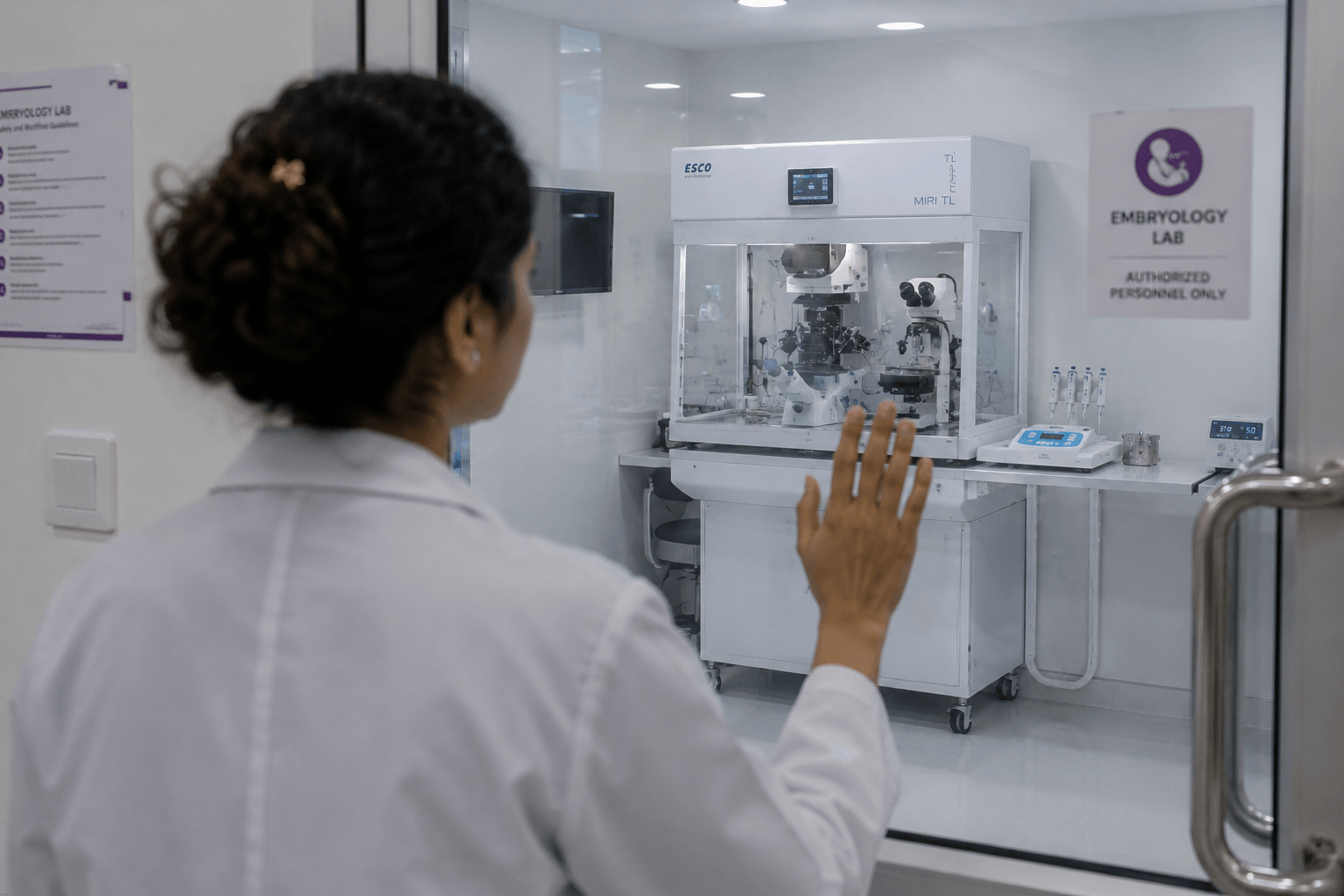
The ₹1 Crore Barrier explained
01
What the money actually buys
The established AI grading systems are not sold as software. They are sold as an incubator: a sealed time-lapse chamber with cameras built into it, and the algorithm licensed to run only on the images that chamber produces. Buying the intelligence means buying the box that houses it, and the box is the expensive part.
A clinic that already owns good microscopes, good incubators and experienced embryologists cannot buy only the missing piece. It is asked to replace working capital equipment in order to obtain a layer of software — and to do it at ₹1,00,00,000 for the first unit, before service contracts, consumables or the second unit a lab of any volume will need.
The algorithm does not need the incubator. The business model does.
02
Why the price holds
Bundling the model to the hardware is a commercial decision, not a technical necessity, and it is a durable one. It converts a reproducible piece of software into a physical unit that can be priced, shipped and defended. It makes the vendor the only source of images the model will accept. And it converts what would otherwise be an operating cost into a capital purchase — the single hardest line for an independent clinic to approve.
It also fixes who the customer can be. A price set against Western reimbursement and Western cycle volumes selects for large, corporate chains anywhere it is exported. In India that leaves roughly 90% of clinics outside the market — not because they are small in patients, but because their capital base was never the one the price was written for.
03
Who is left outside
The clinics priced out are not marginal. They are the standalone and regional units that carry the majority of cycles in the country, run by embryologists with the same training and the same caseload as anyone in the tier above them. What separates them is a balance sheet, and the separation compounds in three directions at once.
Their labs stay fully manual, so the variance and the fatigue on the other two pages in this register go unaddressed — and those are the labs where the volume is. Their cycles produce no structured data, so the domestic evidence base that ought to be growing fastest does not grow at all. And the gap between a chain lab and an independent one widens every year the technology is available but unaffordable.
Meanwhile the equipment those clinics do own is not the limitation. The microscope on the bench already resolves everything the model needs to read. The image is there; only the licence to read it with software is missing.
The image is already on the bench. What the ₹1 crore buys is permission to run software against it.
04
What removes it
Unbundling. Forlivf is a pure software layer that runs on the microscope camera and workstation the lab already has. There is no incubator to buy, no chamber to install, and no capital equipment required — which removes the barrier at its source rather than discounting it.
The commercial shape follows the same logic. Setup is ₹0: the licence, onboarding, EMR integration and staff training are included, with no contract minimum, so a clinic can start without a capital approval at all. The only ongoing cost is a flat per-cycle fee, and that fee sits as a line item on the patient’s out-of-pocket treatment bill — collected and remitted by the clinic, taking nothing out of the hospital’s own margin. A month with no cycles is billed nothing.
The point of pricing it this way is not that it is cheaper. It is that it is reachable by the nine clinics in ten the current model excludes — which is the only version of this technology that changes national outcomes rather than the outcomes of the labs that were already leading.
What answers it
A software-only operating layer
Forlivf plugs into the standard microscope cameras a lab already owns. No incubator, no closed hardware, no capital purchase — the same intelligence, unbundled from the box.
Free to set up, billed per cycle
₹0 to start, no contract minimum, and a flat per-cycle fee that sits on the patient's treatment bill — so adoption costs the hospital owner nothing.